
10 Ways to Nurture Your Children's Creative Potential
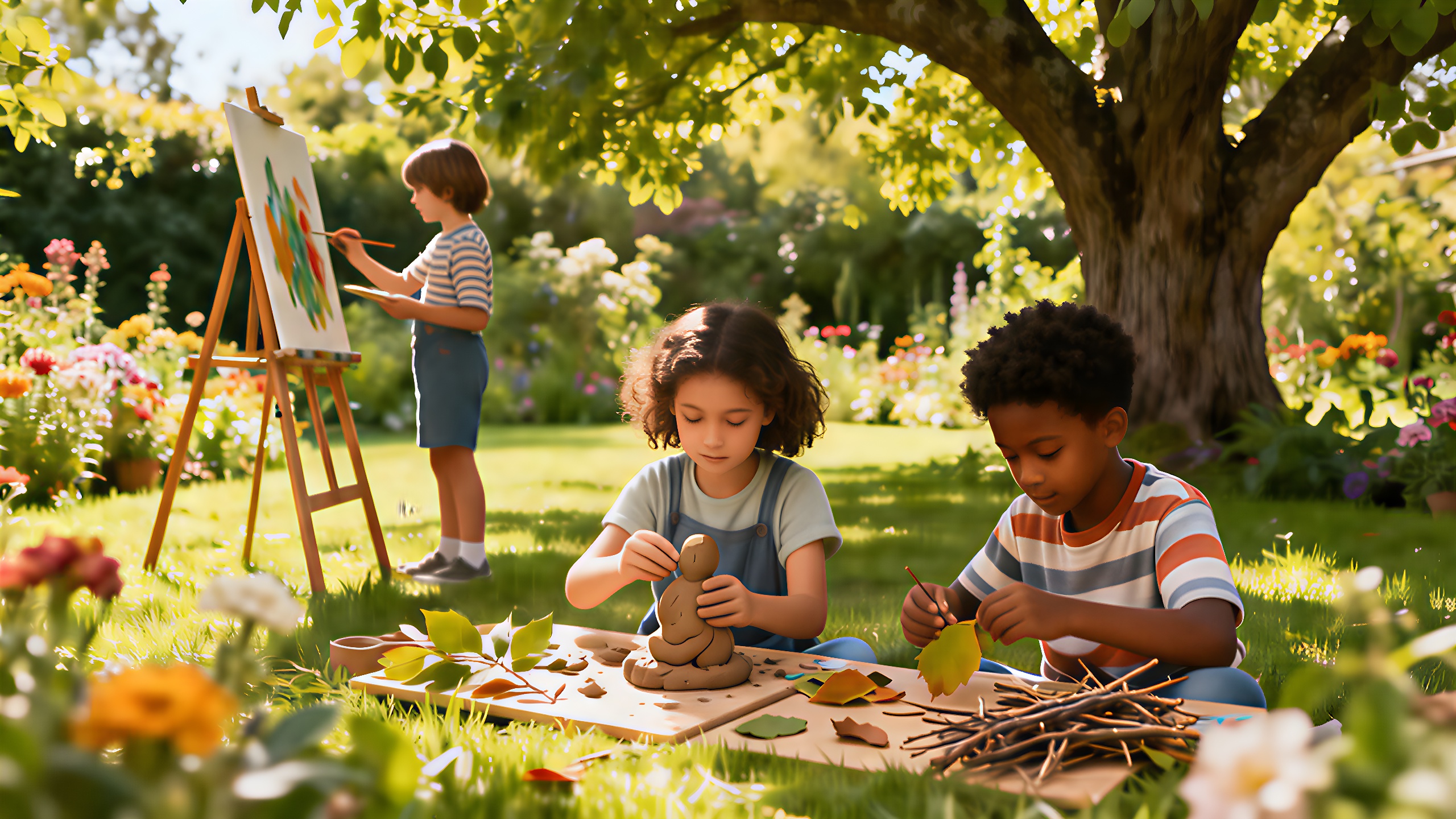

Children are naturally creative and curious. To strengthen these traits, there are various ways to unlock your children's creative potential. Here are ten effective ways to promote their creativity.
One of the simplest ways to encourage creativity is through free play. Let your child experiment with building blocks, colors, or other materials. The more freedom you give, the more creative your child can become.


Provide diverse inputs
Encourage your child to try out different art forms. Whether painting, drawing, making music, or acting—the more diverse the experiences, the more creative muscles can be exercised.

Additionally, you should regularly visit museums or exhibitions. These places provide a wealth of inspiration that can stimulate creative thinking.
Let the children also make their own decisions regarding which creative projects they want to pursue. Self-determination is key to the development of creativity.
Imaginative storytelling
Telling stories is a wonderful way to stimulate the imagination. Sit down with your child and invent stories together. You can take on the role of the storyteller while your child contributes to developing characters and plots.

You can also hold a storytelling competition at home, where all family members write and read their own stories.
Regular creative breaks
Plan regular creative breaks in which the child can freely pursue their imagination. Create a special room or a creative nook that is only used for these activities.

An inspiring environment can work wonders. Decorate this space with artworks that stimulate the imagination and have various materials ready.
Avoid giving your child too many structural guidelines. Let your child experiment and find their own solutions.
It is important to understand that mistakes are allowed. Be patient and encourage your child to embrace unconventional ideas.
Another important point is to foster creativity not only in the artistic domain. Also support creative problem-solving in daily life. Allow your child to solve situations independently.
Offer challenges that require thinking. This way, you act as a supporter but give your child the freedom to find solutions on their own.
By applying these methods, you create an environment where creativity can flourish. This will not only improve their artistic skills but also enhance their problem-solving abilities and build their self-confidence.
Fostering creativity is an ongoing process. Stay adaptable and observe what inspires and excites your child.