
5 Family Rituals that Strengthen Children's Emotional Intelligence


Emotional intelligence is of great importance for children, as it helps them understand their own feelings and build healthy relationships with others. Family rituals play a crucial role in promoting these skills. Here are five effective rituals that you can implement in your family life to strengthen your children's emotional intelligence.
Before we dive into the various rituals, let's first clarify what emotional intelligence actually means. It’s about how well we recognize our own emotions, how we regulate them, and how we perceive and react to the feelings of others. These skills are essential for success and personal well-being.


Cooking Together
Cooking together can become a great ritual. It not only promotes teamwork but also the opportunity to talk about preferences, dislikes, and emotions. While cooking, you can exchange thoughts about what your favorite dish is and why, and even discuss what feelings are associated with certain foods.

Moreover, cooking fosters creativity and responsibility. Children learn that they have an impact on the process and that their choices (such as the selection of ingredients) affect the outcome. This is a valuable lesson for dealing with emotions and decision-making.
For example, you could introduce a weekly family dinner where everyone takes turns choosing a dish they want to cook. This creates anticipation and strengthens family bonds.
Family Meetings
Regular family meetings are another valuable ritual. Here you can discuss what has happened during the week, what challenges there were, and how to deal with them. This provides all family members the opportunity to express their thoughts and feelings.

In these meetings, solutions to problems can also be sought, which encourages children to act empathetically and switch perspectives. They learn that every opinion counts and that it is okay to have different feelings.
The Emotion Game
A playful approach can often help increase emotional intelligence. The 'Emotion Game' can help recognize and express different feelings. Each family member draws a slip of paper with an emotion and has to present it through a short depiction or with facial expressions and gestures.
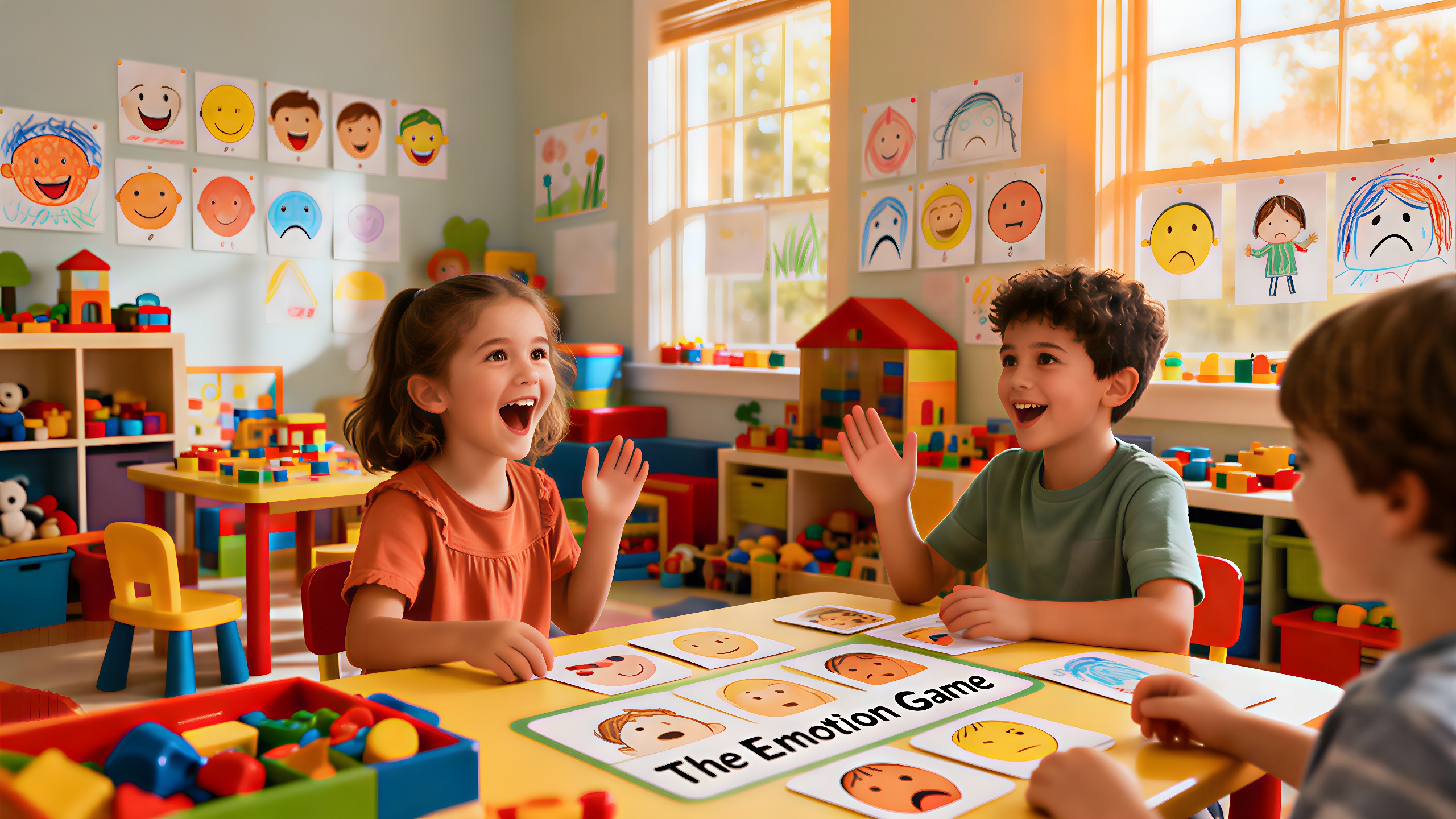
The other family members then try to guess which emotion is being presented. This not only promotes understanding of one’s own and others’ feelings but also is a lot of fun!